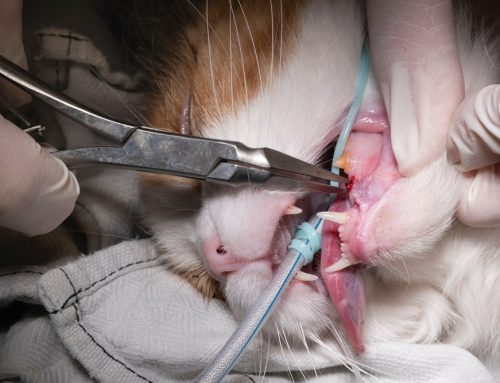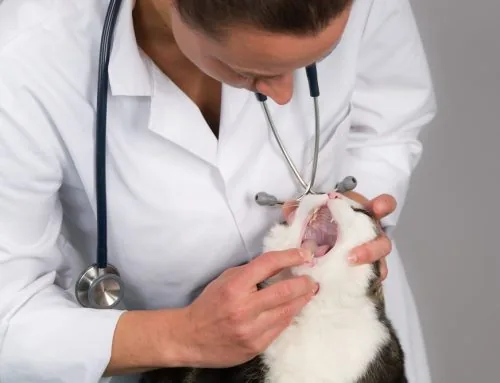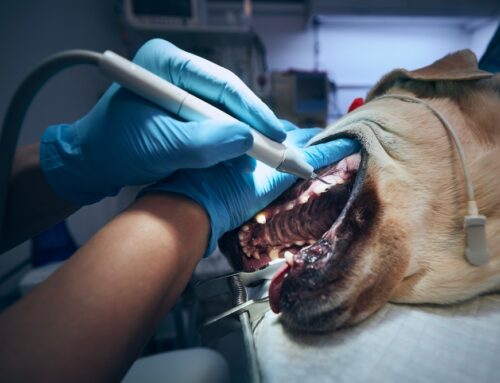
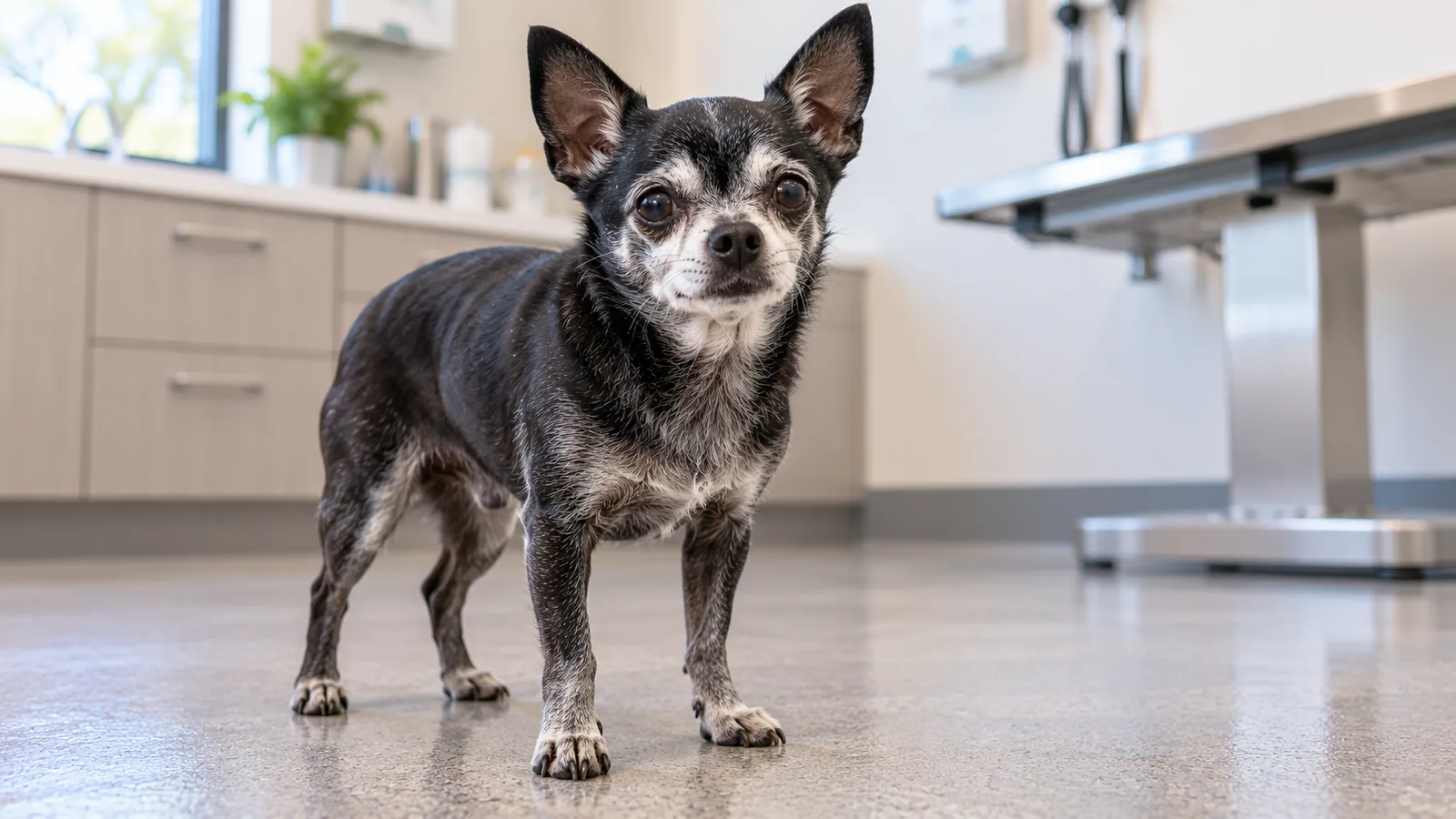
Being told your fourteen-year-old dog needs teeth extracted, or that the cat with a heart murmur has a mouth full of disease, puts you in a hard spot. Anesthesia for a high-risk dental patient is where most of that worry lands, and the worry is fair. Anesthetic risk is real, it is measurable, and it falls unevenly, with some patients carrying far more of it than a healthy young animal. What usually gets lost is how much of it is changeable: age, breed, and existing illness set a starting point, but preparation, drug selection, monitoring, and recovery care do more to decide how the day goes.
Complex patients are most of what we see at North Bay Veterinary Dentistry. Families come to us in Petaluma after a general practice has handled the straightforward cases, which means the mouths we treat usually belong to pets who carry other problems as well. We build anesthesia around the individual animal rather than around a standard protocol, and for the patients who warrant it, we consult with a board-certified veterinary anesthesiologist. If a dental has been sitting on your to-do list because the anesthesia frightens you, or another practice has already said no, tell us about your pet and we can talk through what a plan would actually look like.
Dental Anesthesia for High-Risk Pets: The Basics
- Anesthetic risk is real, but a large share of it is modifiable through preparation, drug choice, monitoring, and recovery care.
- Fear of anesthesia is a poor reason to choose a non-anesthetic cleaning, which can't reach or treat the disease that causes pain.
- A board-certified veterinary anesthesiologist's involvement changes the safety picture for complex patients.
- Untreated dental disease is painful and progressive, so waiting is rarely the safer option it feels like.
Will You Turn Us Away If My Pet Is High-Risk?
Almost every high-risk pet who arrives at our Petaluma practice still gets their dental care, and what changes is the plan wrapped around it rather than whether the work happens. A heart murmur, chronic kidney disease, a seizure history, or a flat face moves a patient into a group that needs individual planning, and that's a reason for more care, not less. What we won't do is guess: every high-risk patient starts with a consultation and a workup, because whether a pet can be anesthetized safely lives in their bloodwork, their heart function, and their history, not in their age on paper.
Occasionally the balance does tip. A pet can be unstable enough, or far enough along in a serious illness, that a long procedure under general anesthesia asks more of their body than the mouth is costing them. When we think that, we say so and talk through what else can be done. That conversation is uncommon, though, and it's a judgment about one animal on one day rather than a rule about seniors or cardiac patients as a category.
Why Is It Normal to Worry About Anesthesia?
Worrying about anesthesia is normal because the risk isn't the same for every patient. Anesthetic risk in dogs and cats is low across the whole population and climbs meaningfully with illness, so a figure that reassures you about a healthy young Labrador says nothing about a twelve-year-old with kidney disease. Your pet isn't the average patient.
Being told "it's very safe" when that isn't your pet's situation makes most families more anxious, not less. Anesthetic mortality is driven partly by things nobody can change and partly by things a team controls completely, and the second group is larger than most families expect.
| Fixed when your pet walks in | Decided by the team |
| Age and species | How thoroughly the patient is worked up beforehand |
| Breed and airway anatomy | Which drugs are chosen, and at what doses |
| Existing heart, kidney, liver, or neurologic disease | How closely the patient is monitored, and by whom |
| How stable the patient is on arrival | How recovery is staffed and how long it is watched |
The left column is why your concern is legitimate; the right is why it's workable. Our team has extensive experience working with patients who have higher than normal anesthesia risks, and our RVT, Ashley, actually spent a decade of her career working with an anesthesiologist. We’ll always be honest with you about weighing the risks with the benefits of treating your pet’s dental disease.
Why Isn't an Anesthesia-Free Cleaning the Safer Choice?
When anesthesia is the thing you're afraid of, an anesthesia-free dental looks like a gentler compromise. It isn't one, because it can't do the thing that treats the disease. Periodontal disease, the infection in the tissue around the tooth roots, does its damage below the gumline, and reaching it means probing, X-raying, and cleaning surfaces no awake animal will hold still for. That's why professional cleaning and anesthesia go together.
| Where the difference shows | Non-anesthetic scaling | A full dental under anesthesia |
| Visible tartar | Removed | Removed |
| Disease below the gumline | Untouched | Probed, cleaned, and treated |
| Dental X-rays | Not possible | Full-mouth imaging |
| Painful or dying teeth | Undetected | Found and addressed |
| Your pet's experience | Restrained awake near sharp instruments | Asleep and pain-controlled |
Anesthesia-free dentals also carry a risk that's easy to miss: false reassurance. The teeth look better, so the problem feels handled, while infection and pain continue underneath for another year. That's one of the hidden dangers of non-anesthetic dental procedures, and it's why the real choice isn't between a safe option and a risky one. It's between treating the disease and only appearing to.
Does It Matter Who Plans the Anesthesia?
For a complex patient, who designs and runs the anesthetic matters as much as the decision to proceed. Anesthesia and monitoring guidelines set a national standard for patient assessment, monitoring, staffing, and recovery, and a high-risk patient's plan should sit above that floor rather than just meeting it.
A board-certified veterinary anesthesiologist trains for years in one thing: keeping patients alive and comfortable under anesthesia. That shows up in three practical ways.
- Drug choice: A dog in heart failure and a cat with advanced kidney disease get different protocols, not the same one at different doses.
- Anticipation: Trouble gets headed off instead of reacted to, because the plan accounts for what this patient is likely to do before they do it.
- Real-time judgment: When a patient doesn't respond as expected, someone with deep experience is making the call.
We consult with a boarded anesthesiologist for our most complex anesthesia cases, case by case, and that collaboration is often what lets a family move forward with dental work they'd been too scared to schedule.
Which Pets Need a Tailored Anesthesia Plan?
The pets who need a tailored anesthesia plan fall into a handful of recognizable groups, and many sit in two at once. Belonging to one is a reason for individual planning, not a reason to skip necessary treatment. An older dog who is also in heart failure is usually where specialist input earns its keep.
Puppies and Kittens
Puppies and kittens process drugs with an immature liver, lose body heat quickly through a large surface area, and can drop their blood sugar during a long fast. Size matters too, because blood loss that would be trivial in an adult dog is significant in a two-pound kitten. None of that rules out anesthesia, but it changes the fasting instructions, the warming, the doses, and how closely a small body gets watched.
Senior Pets
Older pets clear anesthetic drugs more slowly as liver and kidney function decline, hold less cardiovascular and temperature reserve, and often carry quiet disease nobody has found yet. But age itself isn't a disease, and it isn't a reason to refuse anesthesia. Senior pets aren't too old for anesthesia when the plan is built for an older body, and that starts with a thorough pre-anesthetic workup.
Pets With Heart Disease
Heart disease shifts the goal of an anesthetic toward protecting blood flow and blood pressure in a heart with less to give, and drug choice, the fluid plan, and the monitoring all follow from that. Pets with more than one disease at once are common in this group, and an older dog with both a failing heart and reduced kidney function is where individual planning matters most, because the two problems pull the fluid plan in opposite directions.
Pets With Kidney or Liver Disease
Much of the work of processing and clearing anesthetic drugs falls to the kidneys and liver, so disease in either organ changes how drugs behave and how long their effects last. Anesthesia in a patient who is already sick leans hard on pre-anesthetic bloodwork, on correcting hydration and electrolyte problems before anesthesia starts rather than during, on drugs that lean less on the damaged organ, and on supporting blood flow from start to finish.
Pets With Neurologic Disease
Neurologic disease is unusual in that the anesthetic choices can affect the condition itself. Drugs, breathing support, blood pressure targets, and even how a patient is positioned get chosen to protect the brain or spinal cord rather than by general rule. Waking up gets watched especially closely here, since a pet with neurologic disease may need help protecting their airway as they come around.
Flat-Faced Dogs and Cats
Flat-faced dogs and cats are among the most consistently demanding anesthetic patients, because narrow nostrils, a long soft palate, and a narrow windpipe create risk at every phase. The highest-risk moment is usually recovery, when the breathing tube comes out and swelling can obstruct an airway at the exact point monitoring tends to relax. The plan for a pet with a short snout centers on extra oxygen before anesthesia starts, a smooth start, careful timing of when the tube comes out, and a long, close watch afterward.
Injuries That Can't Wait
Sometimes a patient can't be made perfectly stable first. A jaw fracture or an injury that won't wait means the goal becomes doing what can be done quickly: restoring fluid volume, correcting the most dangerous imbalances, and treating the most destabilizing problem before anesthesia starts. Anesthetizing an unstable patient calls for small doses given a little at a time and intensive monitoring, and experience with these cases is what makes it possible to proceed when waiting is the greater risk.
How Do You Lower the Risk for a High-Risk Patient?
Risk comes down in four stages, and the work starts well before your pet goes under and doesn't end when the procedure does.
- The pre-anesthetic workup: A physical exam, bloodwork, and imaging go looking for hidden problems. What comes back shapes the drug plan as much as it clears the patient.
- A protocol built for the individual: Usually several drugs at lower doses, dosed to effect rather than by weight alone.
- Continuous monitoring: Blood pressure, breathing and carbon dioxide, temperature, and heart rhythm are tracked by a trained person whose only job is watching your pet and responding. That matters because anesthetic complications can develop even in a well-planned anesthetic, and outcomes turn on catching them in the first minute rather than the fifth.
- Recovery: Waking up is one of the highest-risk phases of the day, which is why our patients stay under continuous observation through it. Rough recoveries are likeliest in flat-faced pets whose airways can narrow once the tube is out and in older or neurologic patients who lose heat and surface slowly, and pain control belongs here too, since a comfortable patient wakes more smoothly.
Anesthesia safety for pets with health concerns rests on that monitoring and recovery staffing more than on any single drug choice.
Common Questions About Dental Anesthesia for High-Risk Pets
My dog is sixteen. Is that too old for a dental?
Sixteen is a reason for a careful workup, not a disqualification. We've anesthetized patients from eight-week-old kittens to dogs in their twenties, including pets with a history of heart or kidney failure. What we want to know is what their organs are doing now, which bloodwork and imaging answer far better than a birthday does.
What testing happens before anesthesia?
Expect a full physical exam, bloodwork, and a urinalysis at minimum. Depending on what we find and what your pet already carries, we may add chest X-rays, an ECG, or an echocardiogram, which is an ultrasound of the heart, before we commit to a plan. The testing is partly to find problems and partly to choose drugs, so it shapes the protocol rather than just clearing the patient.
Can you sedate my pet instead of using full anesthesia?
Sedation alone can't support a dental procedure safely or effectively, because it leaves the airway unprotected and the patient able to move near sharp instruments. General anesthesia with a breathing tube is both the safer and the more comfortable option, and it's what we use for every dental treatment here.
Moving Forward With a Mouth That Needs Treating
Dental disease doesn't pause while a family works up the courage. It stays painful and it keeps progressing, which is what makes waiting feel safe without being safe. Being told your pet is high-risk is frightening, and for most of the patients we see it's the start of a plan rather than the end of one.
Bring us your worries and your pet's whole history, including the parts another practice flagged as a problem. Schedule a consultation at North Bay Veterinary Dentistry in Petaluma and we'll tell you what we find, what we'd plan, and whether a consultation with our boarded anesthesiologist partner is needed.